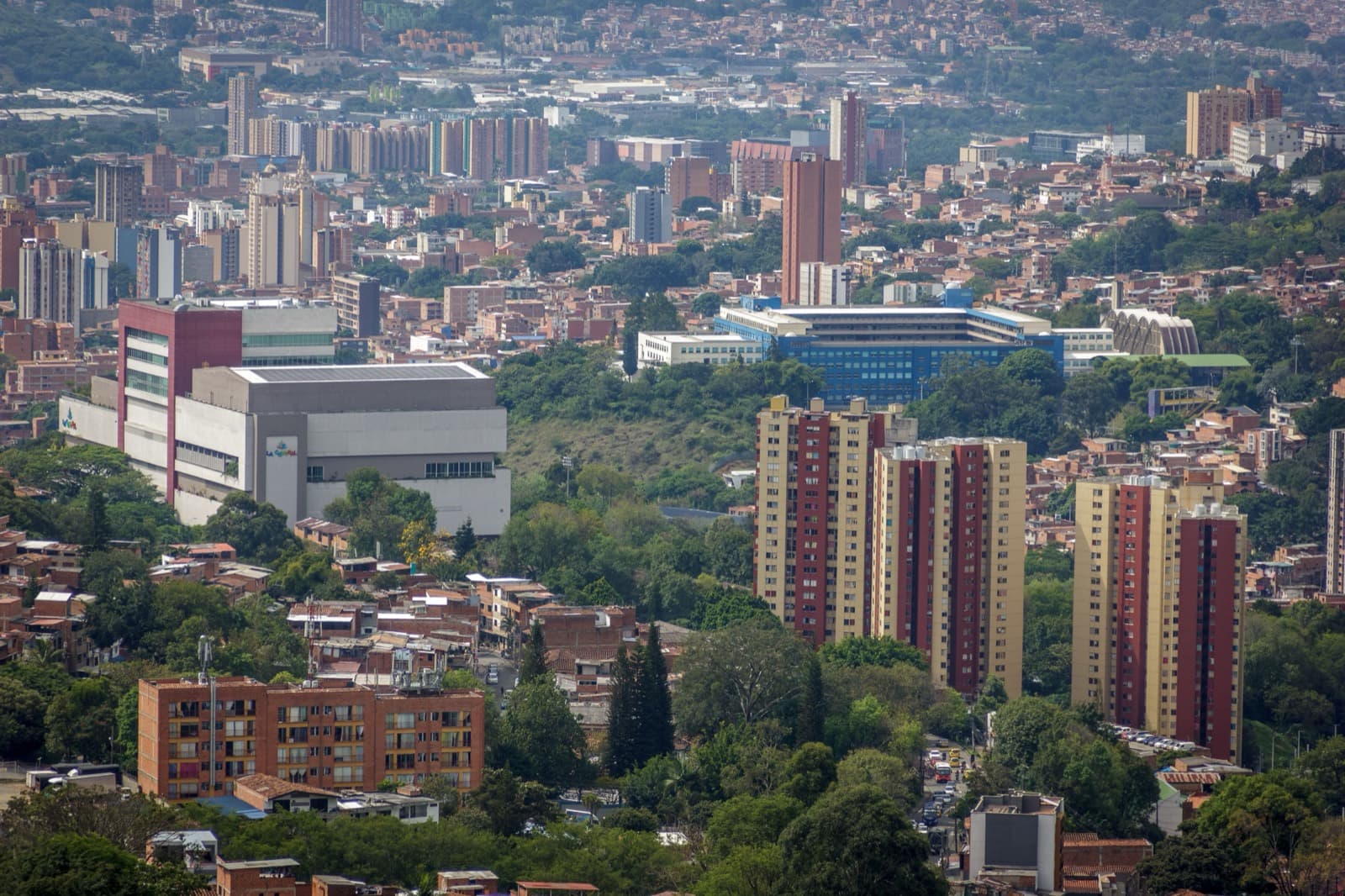
Colombia is one of the most foreign-buyer-friendly property markets in Latin America. You do not need a visa, residency, or a local partner. You can buy an apartment in Medellín with just your passport.
Under Article 100 of the Colombian Constitution, foreign nationals have the same property rights as Colombian citizens. There are no ownership caps, no trust-structure requirements, and no restrictions on urban residential property.
The process follows civil law. Everything runs through public notaries and a national property registry. There is no title insurance and no centralized MLS. A good local lawyer makes the difference between a smooth purchase and an expensive mistake.
Can foreigners really buy property in Colombia?
Yes. You can be on a 90-day tourist stamp and still sign a legally binding purchase agreement. The only restrictions apply to border zones (within roughly 100 km of international borders), protected environmental areas, and certain rural lands with agrarian-reform origins. For apartment buyers in Medellín, none of these restrictions apply.
What is the step-by-step process?
1. Obtain your tax ID (NIT/RUT)
Before you can sign any deed, you need a tax identification number from DIAN, Colombia's tax authority. You apply with your passport. It is a straightforward process and can usually be completed in a few days. [VERIFY: exact DIAN processing time varies by office; online applications may take 3-5 business days]
2. Find the property and do due diligence
There is no centralized MLS in Colombia. Properties are listed on platforms like FincaRaiz, MetroCuadrado, and through local agencies. Once you find a property, your lawyer pulls the Certificado de Tradición y Libertad (CTL), the official property ledger that shows every owner, mortgage, lien, and legal claim in the property's history.
A full title study (estudio de títulos) typically covers the last 20 years of ownership. It confirms that all past transfers were valid, there are no gaps or irregularities, and no third parties (heirs, co-owners) could later claim rights.
3. Open a foreign exchange channel
This step is the most overlooked and the most important. Colombian law requires funds for property purchases to enter the country through a licensed foreign exchange intermediary. If you wire money directly to the seller's personal account, the central bank classifies it as a personal remittance and you lose the legal right to repatriate your capital when you sell.
Open a brokerage account (cuenta de corretaje) with an authorized intermediary. The intermediary files Formulario 4 with the Banco de la República, registering your capital as foreign direct investment. After the deed is registered, a follow-up Formulario 11 finalizes the record. Both filings are required to repatriate your proceeds tax-free when you sell.
4. Sign the promesa de compraventa
The promesa de compraventa is a binding preliminary agreement that sets out the price, payment method, deadlines, and penalties for breach. A deposit of 10% to 20% is standard. This contract should be drafted or at least reviewed by a Colombian lawyer.
5. Close at the notary
Both parties appear before a notary to sign the escritura pública, the public deed. The notary verifies identities, reads the deed aloud, and collects all closing costs. Full funds must be available before the closing appointment because the notary must confirm payment before executing the deed.
6. Register the deed
After signing, the deed is submitted to the Oficina de Registro de Instrumentos Públicos (ORIP) for official registration. Only after registration do you legally own the property. You also need to update the municipal property tax records (Impuesto Predial) at the local cadastral office.
From signed promesa to completed registration, the process typically takes 30 to 45 days.
What are the closing costs?
Buyers should budget approximately 3% to 5% of the property value in statutory closing costs. Here is the breakdown:
| Cost | Approximate rate | Who pays |
|---|---|---|
| Notary fees | 0.3% + 19% VAT | Split 50/50 with seller |
| Registration tax (impuesto de registro + beneficencia) | ~1.6% to 1.8% | Buyer 100% |
| Stamp tax (Impuesto de Timbre) | 0% below ~COP 1.05B; 1.5% to 3% above | Buyer 100% |
| Legal fees | 0.5% to 1.5% (optional) | Buyer 100% |
[VERIFY: exact rates depend on current UVT (Unidad de Valor Tributario) for the year; confirm with your notary before closing]
For a COP 500,000,000 property (roughly USD 120,000), expect total buyer closing costs of approximately COP 10,000,000 to COP 15,000,000 (USD 2,400 to USD 3,600) — see the full cost of buying property breakdown for a line-by-line explanation of each fee.
Can foreigners get a mortgage?
Essentially no. Colombian banks require a residency visa, a cédula de extranjería, Colombian-sourced income, and an established local credit history. Most foreign buyers purchase in cash, refinance assets at home, or use developer financing for new construction projects. Developer financing typically involves staged payments over 18 to 36 months during construction.
What about the investor visa?
For buyers who want residency, the Type M Migrant Investor Visa requires a minimum property investment of approximately 350 times the national monthly minimum wage. [VERIFY: the current threshold is roughly COP 613 million, approximately USD 150,000 at 2026 exchange rates; confirm exact figure with Migración Colombia]
The visa is valid for up to three years, renewable, and counts toward the five-year requirement for a permanent Resident Visa.
FAQ
Do I need a visa to buy property in Medellín?
No. You can buy property with just your passport, even on a 90-day tourist entry stamp. Colombian law grants foreign nationals the same property rights as citizens for urban residential purchases.
What is the Certificado de Tradición y Libertad?
It is the official property ledger that shows every owner, mortgage, lien, and legal claim in the property's history. Your lawyer pulls this as the first step of due diligence. Never buy a property without reviewing the CTL.
Why can't I just wire money directly to the seller?
If you wire funds directly without using a licensed foreign exchange intermediary, your investment is classified as a personal remittance. You lose the right to repatriate your capital when you sell and become ineligible for the investor visa.
How long does the purchase process take?
From signing the promesa de compraventa to completed registration, expect 30 to 45 days. Opening a foreign exchange brokerage account beforehand can add 2 to 4 weeks.
What are the ongoing costs after buying?
The main ongoing cost is Impuesto Predial, an annual property tax of approximately 0.3% to 1.6% of the cadastral value, depending on the municipality and property type. If you buy an apartment, you also pay a monthly cuota de administración for building maintenance.
Are there areas where foreigners cannot buy?
Yes. Properties within roughly 100 km of international borders, protected national parks, indigenous reserves, and certain rural lands with agrarian-reform restrictions are off-limits or restricted. For apartment buyers in Medellín, none of these apply.
Do I need a lawyer?
Strongly recommended. Colombia has no title insurance, and a lawyer's title study is your only protection against hidden liens, inheritance claims, or unregistered improvements. Legal fees typically run 0.5% to 1.5% of the purchase price.